What does dark money mean in Europe?
What Is Public Integrity in Europe and Why It Matters Today
Sanket Patel
December 5, 2025
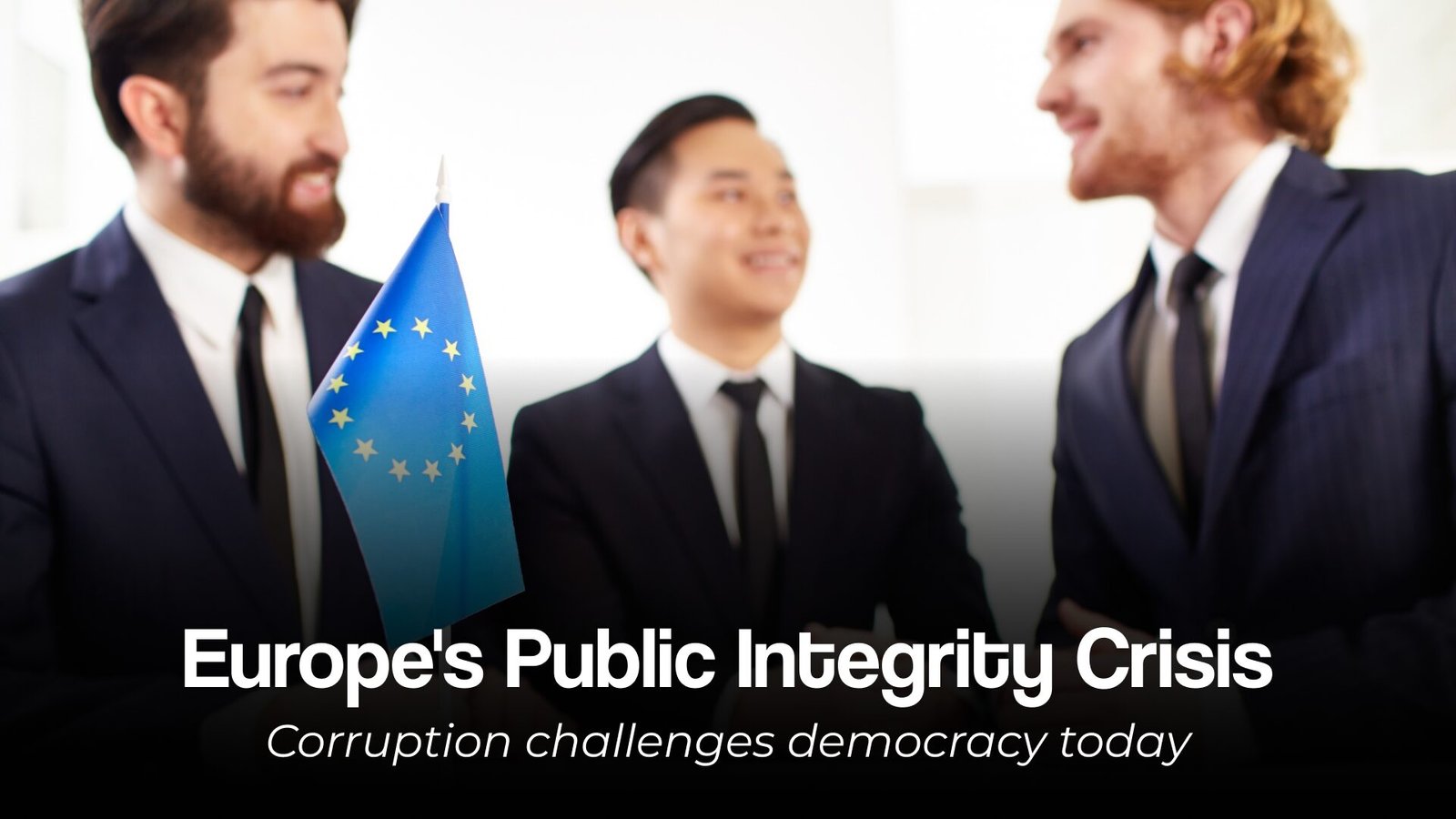
Public integrity in Europe refers to the ethical standards ensuring public officials exercise authority impartially, transparently, and without personal gain, forming the backbone of democratic governance across EU institutions and member states. It encompasses reducing corruption opportunities, fostering a societal culture against misconduct, and enforcing accountability through robust systems. Frameworks like the OECD Recommendation on Public Integrity emphasize integrating these principles into public management to prevent discretionary abuse.
Core Pillars of Public Integrity
Public integrity systems define clear ethical rules, support compliance via institutional frameworks, and enforce them effectively. Key elements include codes of conduct for officials, conflict-of-interest guidelines, gift policies, and post-employment restrictions, as seen in the European Parliament’s Code of Conduct binding MEPs to act solely in the public interest. Oversight mechanisms, such as those recommended by the Council of Europe’s GRECO, demand systemic corruption risk analysis and credible sanctions for violations.
Transparency plays a central role, with high-performing states prioritizing open data over surveillance to build trust. Evidence-based policies link integrity directly to public confidence, where lapses erode legitimacy and governance efficiency.
Recent Scandals Exposing Failures
European governments face mounting integrity crises, exemplified by Hungary’s systemic corruption under Prime Minister Viktor Orbán, where cronies receive public contracts and the CPI score has plummeted to 41 amid rule-of-law erosion. Malta’s former prime minister and officials confront charges over a €4 billion hospital privatization deal tainted by bribery. The European Parliament reels from Qatargate and 2025 Huawei bribery allegations involving up to 15 MEPs accepting gifts for favorable positions, highlighting a culture of impunity despite prior reforms.
In Austria, political interference in judicial probes undermines probes, while Slovakia’s dissolution of anti-corruption units under Robert Fico has slashed its CPI to 49. These cases reveal persistent procurement flaws, with EU funds fueling undue influence in countries like Croatia and the Czech Republic.
Why It Matters in 2025
Worsening corruption levels, with the EU’s CPI average dropping to 64 for the second year, weaken responses to climate crises, strain public services, and fuel populism. Scandals like those implicating former EU figures Federica Mogherini and Stefano Sannino threaten institutional credibility and risk broader crises. Without reforms, such as a unified EU Anti-Corruption Directive, citizen trust erodes further, as seen in declining confidence post-Qatargate.
Procurement vulnerabilities expose billions in EU funds to abuse, demanding revisions to directives for better competition and scrutiny. Integrity gaps also amplify foreign influence, from Qatar to China, mocking democratic processes.
Path Forward Against Impunity
Urgent ethics overhauls must include mandatory lobbying registers, whistleblower protections, and independent enforcement to close loopholes. Countries like Estonia show e-procurement transparency works, enabling public oversight. The EU must withhold funds from non-compliant states like Hungary and enforce GRECO standards rigorously to restore accountability. Citizens and civil society hold the key, demanding leaders prioritize integrity over self-interest.
Source Links:
- https://spa.sdsu.edu/_resources/files/documents/public_integrity_and_trust_in_europe.pdf
- https://transparency.eu/new-european-parliament-corruption-allegations-transparency-international-eu-response/
- https://www.eupan.eu/wp-content/uploads/2019/05/2016_1_NL_Public_Integrity_and_Trust_in_Europe.pdf
- https://www.transparency.org/en/news/cpi-2024-western-europe-eu-leaders-hollow-efforts-cause-worsening-corruption-levels
- https://knowledgehub.transparency.org/guide/international-anti-corruption-commitments/8344
- https://www.europarl.europa.eu/RegData/etudes/BRIE/2019/608873/IPOL_BRI(2019)608873_EN.pdf
- https://en.wikipedia.org/wiki/Qatar_corruption_scandal_at_the_European_Parliament
- https://eucrim.eu/news/greco-fifth-round-evaluation-report-on-italy/
- https://www.economist.com/europe/2025/12/04/why-a-small-corruption-scandal-is-a-big-problem-for-the-eu
- https://www.euronews.com/my-europe/2025/02/11/corruption-is-getting-worse-across-the-eu-transparency-international-index-warns
- https://www.agora-parl.org/sites/default/files/agora-documents/21st%20General%20Activity%20Report%20GRECO%202020.pdf
- https://transparency.eu/euis/
- https://uncaccoalition.org/6thregionalmeetingforeurope_publicsectorintegrity/
- https://www.oecd.org/content/dam/oecd/en/publications/reports/2020/05/oecd-public-integrity-handbook_598692a5/ac8ed8e8-en.pdf