

What does dark money mean in Europe?
EU AI Act Unleashed: Europe’s Innovation Brake or Safety Net?
Sanket Patel
December 27, 2025
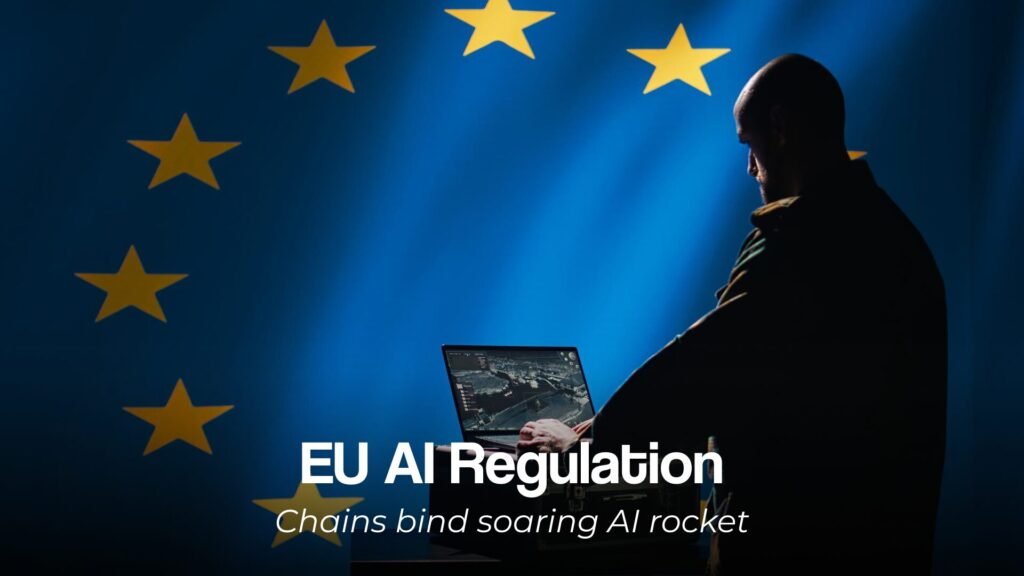
The EU AI Act took full effect August 2025, mandating risk-based oversight for all AI systems continent-wide. High-risk deployments—like hiring algorithms or medical diagnostics—face audits, transparency rules, and €35M fines. France‘s Mistral AI and Germany’s Aleph Alpha scramble to comply, while 68% of startups report diverted R&D budgets. Amid Europe’s Q4 economic pulse (+0.3% GDP), is this landmark law fortifying trust or slamming brakes on the AI race against U.S./China giants?
The Act in Action: Rules Hit the Ground
Phased rollout targets “general-purpose” models first (Mistral’s forte), with prohibited uses like social scoring banned outright.
Core mandates unpacked:
- Risk Tiers: Minimal (chatbots: self-certify), High (biometrics: pre-market approval), Prohibited (real-time facial recognition in public).
- Compliance Burden: SMEs get 36-month grace, but documentation costs average €500K/year per PwC surveys.
- Enforcement Muscle: National authorities plus new AI Office in Brussels; 1,200+ notifications filed Q4 2025.
- French Frontline: Bpifrance flags 40% of €3B AI funding now compliance-allocated.
This layers onto GDPR/AI ethics, creating Europe’s strictest tech regime amid ECB‘s steady 3.25% rates nurturing cautious investment.
Startup Shockwaves: Compliance vs. Competitiveness

France’s 500+ AI firms—home to 3 unicorns—feel the pinch hardest, echoing startup boom regulatory fears.
Impact breakdown:
- Mistral’s Pivot: €2B valuation holds, but CEO Arthur Mensch shifts 25% engineers to “AI safety” teams, delaying model releases.
- Fintech Fallout: Lydia/Qonto retrofit credit AI under high-risk rules, hiking costs 18% amid ECB margin squeezes.
- Scale-Up Exodus: 12% of Series B founders eye UK/U.S. relocation per 2025 Atomico report, citing “regulation velocity.”
- Silver Lining: Trusted brands gain edge; Germany’s Siemens reports +15% enterprise contracts post-certification.
A 2025 Dealroom analysis shows EU AI funding flat at €8B vs. U.S. $45B—Act contributes 22% “opportunity cost.”
Global Context: Fortress Europe or Thought Leader?
U.S. laissez-faire breeds OpenAI dominance; China’s state AI surges unchecked. EU bets regulation builds “trustworthy AI” moat.
Comparative Pulse:
Region | Regulation | Funding 2025 | Unicorn Count |
EU | Strict tiers | €8B | 8 |
U.S. | Voluntary | $45B | 42 |
China | State control | $12B | 15 |
UK | Light-touch | €4B | 6 |
France leverages Station F’s AI labs for sandbox testing, but critics warn of “Brussels effect” stifling €200B GDP potential by 2030 (McKinsey).
Winners, Losers, and Adaptation Plays
Optimists project +€150B economic boost by 2030 via trusted AI adoption. Pessimists foresee talent flight, with 20K AI jobs at risk.
Q1 2026 benchmarks first fines/enforcement wins. For Europe‘s economic pulse—France’s startup surge fueling +0.4% GDP—AI Act decides if regulation accelerates innovation or leaves Europe spectating the global race.
Horizon Scan: Net Positive or Growth Killer?
Source Links:
- https://digital-strategy.ec.europa.eu/en/policies/regulatory-framework-ai
- https://artificialintelligenceact.eu/implementation-timeline/
- https://intellias.com/eu-ai-act-risk-levels/
- https://www.trail-ml.com/blog/eu-ai-act-high-risk-checklist
- https://secureframe.com/blog/eu-ai-act-compliance
- https://dig.watch/updates/eu-ai-act-challenges-68-of-european-businesses-aws-report-finds
- https://www.maginative.com/article/frances-bpifrance-commits-10-3-billion-to-ai-ecosystem-ahead-of-global-summit/
- https://sifted.eu/articles/state-european-tech-report-2025
- https://tradingeconomics.com/euro-area/gdp-growth
- https://ec.europa.eu/eurostat/web/products-euro-indicators/w/2-05122025-ap