What does dark money mean in Europe?
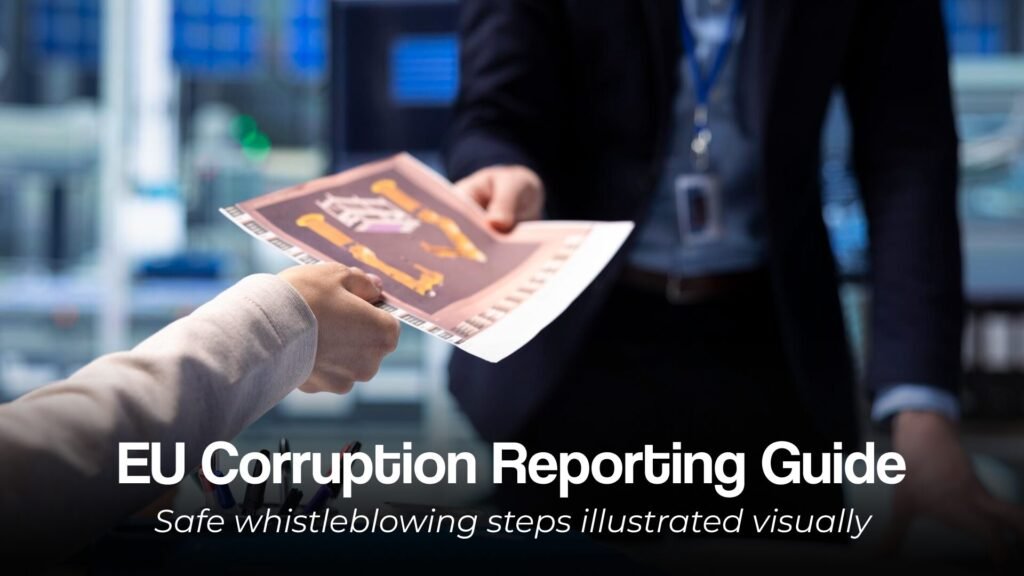
How to Report Public Sector Corruption in the EU Safely and Effectively?
Yan Sikorin
January 20, 2026
Understanding Public Sector Corruption in the EU
Public sector corruption undermines trust in government, drains resources, and stifles economic growth across the European Union. It includes bribery, nepotism, embezzlement, and abuse of power by officials in areas like procurement, public contracts, and subsidies. The EU estimates corruption costs €56 billion annually in public procurement alone, per a 2023 European Commission report.
High-profile cases, like the 2022 Qatargate scandal involving EU Parliament members allegedly accepting bribes from Qatar and Morocco, highlight the stakes. Ordinary citizens, employees, or contractors often spot irregularities first—such as rigged tenders or kickbacks—and their reports can trigger investigations.
The good news? The EU’s Whistleblower Protection Directive (EU) 2019/1937, fully transposed by member states by December 2023, mandates safe reporting channels and prohibits retaliation like dismissal or harassment.
Know Your Rights as a Whistleblower

EU law shields you from reprisals if you report in good faith, even if evidence later proves incomplete. Key protections include:
- Confidentiality: Your identity stays protected unless you consent otherwise.
- No retaliation: Employers can’t fire, demote, or intimidate you.
- Support measures: Access to legal aid, psychological help, and interim relief in some countries.
- Scope: Covers EU-level bodies (Parliament, Commission) and national public sectors.
Protections vary by member state—stronger in Nordic countries like Denmark, evolving in others like Hungary. Check your country’s transposition via the EU’s.
Step-by-Step Guide to Reporting Safely
Follow these structured steps to maximize impact while minimizing risks.
1. Assess the Situation and Gather Evidence
Document everything meticulously before reporting. Note dates, names, amounts, emails, contracts, or witness details. Use secure tools like encrypted notes (e.g., Signal Notes) or password managers.
- Avoid company servers or personal emails traceable by suspects.
- Quantify impact: “€500K tender awarded to unqualified firm X on [date].”
2. Choose the Right Reporting Channel
EU law requires three channels: internal (employer), external (national authority), and public (media). Prioritize based on risk.
Channel | Best For | Examples in EU Countries | Pros | Cons |
Internal | Minor issues in large orgs | EU institutions’ OLAF ethics line; national ministries | Quick resolution; less exposure | Risk if corrupt insiders control it |
External | Serious public sector cases | OLAF (EU-wide); national anti-corruption agencies (e.g., UK’s SFO, France’s AFA) | Independent probes; full protections | Slower process |
Public | Last resort/high risk | SecureDrop platforms (e.g., ICIJ); journalists at OCCRP | Amplifies pressure | Highest personal risk without protections |
For EU-wide public sector issues, start with the European Public Prosecutor’s Office (EPPO) at.
3. Submit Your Report Securely
- Anonymity tools: Use Tor browser, VPNs (e.g., Mullvad), or platforms like SecureDrop/GlobaLeaks.
- Hotlines: EU’s OLAF tip line national ones like Germany’s BKA whistleblower portal.
- Sample report structure:
- Your status (anonymous/whistleblower).
- Incident details (what, who, when, evidence).
- Potential harm (financial loss, public interest).
- Contact for follow-up (encrypted if needed).
In countries like the Netherlands, use the Huis voor Klokkenluiders for free legal vetting.
4. Protect Yourself Post-Reporting
- Legal support: Contact NGOs like Transparency International EU or national chapters (e.g., TI Czechia).
- Digital hygiene: Enable 2FA, use ProtonMail for comms, avoid social media leaks.
- If retaliated against: Report to labor authorities; EU directive requires remedies.
Real-world win: In 2024, a Romanian whistleblower exposed hospital procurement fraud via the National Anticorruption Directorate (DNA), leading to arrests and €2M recovered—protected under transposed EU law.
Country-Specific Reporting Resources

Navigate variations with these key contacts (updated as of 2026):
- Germany: Federal Criminal Police Office (BKA) whistleblower portal.
- France: Agence Française Anticorruption (AFA) secure line.
- Italy: Autorità Nazionale Anticorruzione (ANAC) platform.
- Poland: Central Anticorruption Bureau (CBA).
- Spain: Oficina Antifraude de Cataluña for regional issues.
Full directory: EU Commission’s.
Common Pitfalls and Success Tips

Avoid these traps:
- Reporting without evidence (dismissed as baseless).
- Using unsecured channels (e.g., regular email).
- Going public too soon (endangers safety).
Success boosters:
- Collaborate with journalists (e.g., via EU’s Protected Whistleblowers Network).
- Follow up politely after 3 months.
- Leverage EU funding: Whistleblowers can access victim support funds.
In 2025, EPPO cases rose 25% thanks to safer channels—your report could join them.
Conclusion: Empower Change Through Safe Reporting

Reporting corruption isn’t just civic duty—it’s a protected right that drives accountability. By choosing the right channel, securing your evidence, and using EU safeguards, you can expose wrongdoing without fear. Start today: Visit OLAF or your national authority. Together, we build a transparent EU.
Source Links:
- https://eur-lex.europa.eu/legal-content/EN/TXT/?uri=CELEX:32019L1937
- https://commission.europa.eu/aid-development-cooperation-fundamental-rights/your-fundamental-rights-eu/protection-whistleblowers_en
- https://antifraud.ec.europa.eu/report-fraud_en
- https://www.eppo.europa.eu/en/reporting-crime-to-eppo
- https://ec.europa.eu/info/policies/justice-and-fundamental-rights/upward-reporting-whistleblowers/national-whistleblower-protection-rules_en
- https://transparency.eu/wb-ec-con/
- https://www.antykorupcja.gov.pl/download/4/12766/pwc-public-procurement-costs-we-pay-for-corruption-study-en.pdf
- https://eucrim.eu/news/high-risk-areas-of-corruption-in-the-eu-in-depth-report-highlights-six-vulnerable-sectors/